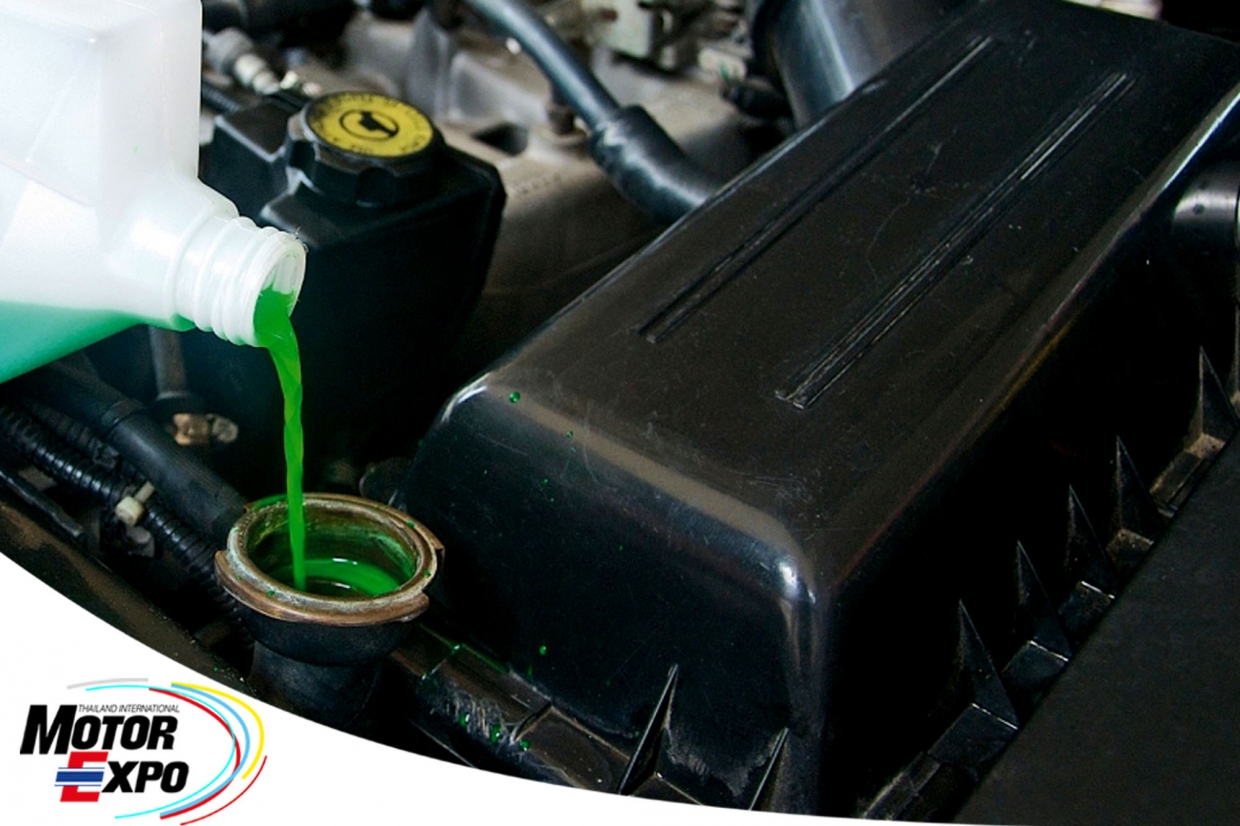
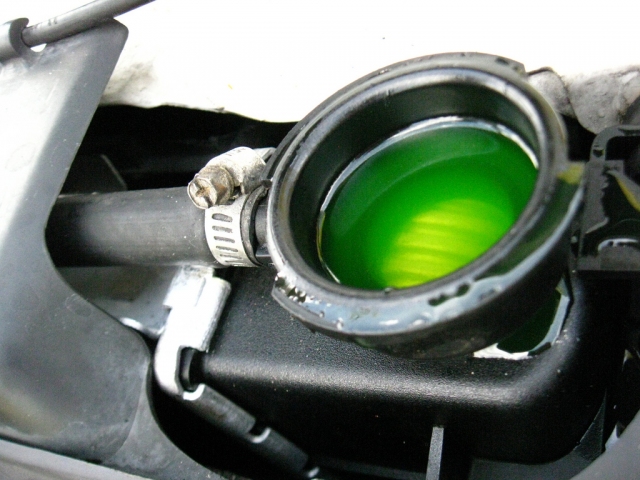
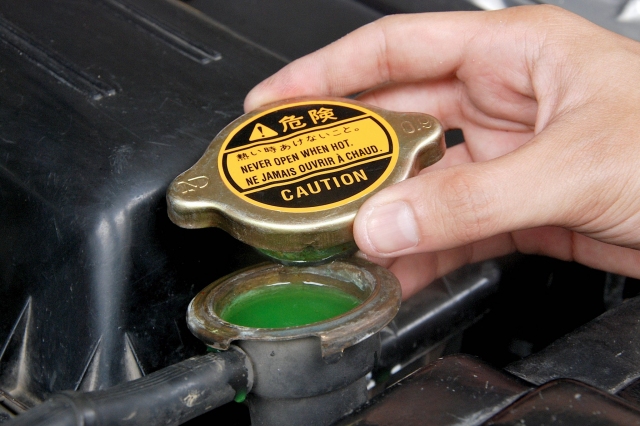
Add coolant to the radiator (plain water is enough), really?
Aug 20 , 2018
From the question, they say…: Is it true that there's no need to add coolant to the radiator (plain water is enough)?
Not true! Because plain water has a lower boiling point (boils faster) than coolant, it cannot cool the engine sufficiently when it's extremely hot, leading to a high chance of overheating. Coolant contains ethylene glycol, which prevents freezing and raises the boiling point, as well as anti-rust and anti-corrosion agents.
The principle of an engine's operation is intake, compression, combustion, and exhaust to convert thermal energy into mechanical energy, using a liquid to contact the metal surface outside the combustion chamber to absorb heat and “dissipate it” outside the engine. This liquid must not evaporate easily, be non-toxic, non-corrosive, and easily obtainable. Of course, these properties can be found in “clean water” - it doesn't even need to be pure, tap water is sufficient. However, it's still not good enough in some situations.
In the past, engines did not produce high power, so the heat “dissipated” was not much. Currently, engines have significantly increased power compared to the same displacement. Suppose you have to drive up a high mountain; the engine must use high power to overcome the incline. The higher you go, the lower the atmospheric pressure, and the boiling point of water decreases. Combined with the increased heat dissipated by the engine, this causes water to boil quickly, immediately creating a critical cycle. This is because steam in its gas state is a very poor heat conductor. The engine therefore gets hotter, and the water boils more. If the engine is not turned off, it will be damaged in a few minutes. Therefore, a substance must be mixed with water to increase its boiling point, which is ethylene glycol, or the coolant we know well, because it dissipates heat better and has a low freezing point.
If someone tells you not to waste money on ethylene glycol and that plain water is enough, don't believe them! Even if it's not for preventing freezing or raising the boiling point, ethylene glycol should always be mixed in because it contains anti-rust and anti-corrosion agents. Furthermore, it also contains lubricating agents for the friction surfaces in the engine's water pump, which helps extend its lifespan.
Every time the cooling system is repaired, or if there is a coolant leak, coolant (ethylene glycol) must always be added to the appropriate concentration. The lifespan of the coolant should not exceed 3 years. Ideally, it is best to specify that the service center replaces the coolant every 2 years.
We use cookies to manage personal data and to develop and improve your website browsing experience, in accordance with our Privacy Policy and Terms of Use.